

Four common approaches are examined using amount staked, automatic collection target and the variation in balance they create. The essential constraint is Aviator's embedded 3% theoretical house edge. Neither a progression, a fixed target nor a two-panel split changes it; the differences concern the distribution and potential speed of losses.

A betting tactic controls the timing and amount of exposure rather than the random result. Auto collection can reduce hesitation, while a progression or split stake can change the balance's volatility. The underlying 3% theoretical house edge remains the same; use the comparisons below to understand risk, not to seek a guaranteed profit.
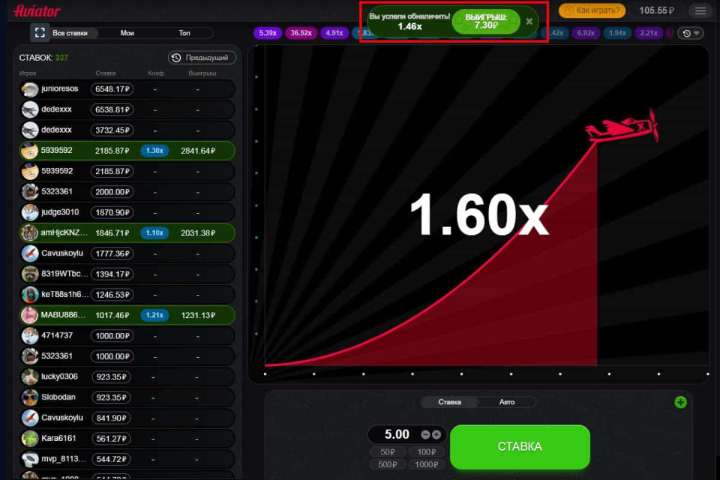
A virtual balance is a display for learning. It does not represent kwacha held by MTN MoMo, Airtel Money or a bank. A successful simulated cash-out is an example of the interface, not a payment. A history row represents a recorded demo outcome and does not establish the result of the next round.
SPRIBE — official game information and demonstration · Bank of Zambia — kwacha
An RTP of 97% corresponds to a 3% house edge on amount staked, whether collection is targeted at 1.5× or 500×. Various tactics concentrate or spread exposure differently. None turns the mathematical expectation into a guaranteed advantage.
The game's provably fair process commits the server seed prior to a round and derives the stopping value from the underlying inputs. Patterns and commercial predictors do not supply those inputs before they are disclosed. Changing an interface setting changes the player's exposure, not that mechanism.
The two choices available to the player are the stake and when to request collection. The following calculations examine their costs rather than proposing a system to beat the game.
Completed multipliers in the history show the variety of past outcomes. They do not provide a reliable forecast for the subsequent flight.
A belief that a large outcome must follow several small ones is the gambler's fallacy. Each fresh round is generated from its own committed inputs, independently of the preceding result or hundred results. Three low crashes do not raise the probability of a high value next.
The same fallacy occurs when a roulette player assumes red is due after twenty black results. Previous outcomes do not create that obligation.
Gambler's fallacy · Monte-Carlo casino, August 1913

Automatic collection requests the credited return when a selected multiplier is reached, without waiting for a manual tap. Consider a fictional sequence using 500 units and a 1.5× target: gains of 250, 250, a loss of 500 and a gain of 250 would total +250 units. Targets from 1.2× to 1.6× can create frequent smaller returns, but a 1.00× crash can erase multiple such gains. A short favourable sequence does not change the −3% theoretical expectation.
A smaller target can change the frequency and size of credited returns. It does not remove the mathematical cost of the stakes or make the session financially safe.
Aviator supports two simultaneous entries with distinct collection settings. A split could assign equal fictional amounts to a lower target of 1.3×–1.6× and a higher target of 3×–10× or more. For illustration, 500 units at 1.5× would return 750 if the target is reached; a second 500 at 5× would return 2,500 if reached. The approximate reach frequencies are around two in three and one in five respectively, subject to the 97% RTP factor. The overall long-run expectation remains −3% of total stakes.
The panel split is a way of describing different exposure levels, not protection against the shared crash or improvement in mathematical return.
Each panel specifies its own amount and automatic collection target. Both follow the same flight, and one can be collected while the other remains active.
Calling the lower-target entry insurance is misleading. If both remain active when the same flight stops, both lose. The theoretical expectation of two 500-unit stakes remains −3% of their 1,000 units of combined turnover.

Martingale attempts to recover previous losses and gain the original stake with a single later win. Its weakness follows directly from the arithmetic: the stake required for another attempt can rise much faster than the available balance.
| Streak depthLosses in a row | Base 500 unitsRequired bet | Running totalTotal staked |
|---|---|---|
| 1 | 500 units | 500 units |
| 3 | 2,000 units | 3,500 units |
| 5 | 8,000 units | 15,500 units |
| 8 | 64,000 units | 127,500 unitsUsually where the bankroll dies |
| 10 | 256,000 units | 511,500 unitsJust to recover a 500-unit hole |
Illustrative progression using a 500-unit base: the amount required doubles at each loss, whereas a balance cannot be assumed to grow exponentially.

In the example of ten successive losses, the ninth doubling raises a 500-unit initial stake to 256,000 units for the tenth entry. A round below 2× is not rare, and an extended losing sequence is possible. Account or stake limits can make the progression impossible long before a recovery occurs.
Changing the sequence of stake sizes only changes how losses are distributed. The expected cost is still 3% of cumulative turnover. A doubling sequence grows exponentially, unlike the balance it consumes.
Aiming to collect at 1.3×–1.5× manually resembles a small preset target, except that it depends on the person's timing. A rapid stop can occur before the click. Regular early collection provides no new information about a subsequent flight and is not a method for improving mathematical expectation.
| ApproachStrategy | Risk shapeVolatility | ExpectationHouse edge | FramingWhat it actually does |
|---|---|---|---|
| Auto cashout 1.2×–1.6× | LowWins in most rounds | −3% | Removes reaction cost and draws the edge spend out over time. Wins nothing, but ends the session predictably. |
| Split into two bets | MediumHalf at 1.3×–1.6×, half at 3×–10× | −3% | Changes session texture: both stability and a multiplier chance in one round. The outcome sums to the same −3%. |
| Manual fixed low x | LowPlus risk of clicking too late | −3% | The same as auto cashout, but with human delay. On a fast crash the click doesn't make it. |
| Martingale | ExtremeExponential bet growth | −3% | Transfers the loss into one rare burst. Hits bankroll or table limit, not probability. |
The table does not rank a profitable tactic: all approaches retain the same house edge. The differences relate to balance variability and consumption of the amount set aside.

Losses are a normal possible outcome, including extended losing runs. A pre-set spending cap can limit total exposure; it does not determine the duration or success of the next session.
A hypothetical balance of 5,000 units and stakes of 25–50 each illustrates how smaller per-round exposure differs from committing a large share at once. The original example considers 150–200 rounds; neither that number nor any stake share guarantees the balance lasts. The −3% theoretical edge is unchanged. An illustration is not a recommended stake or session length.
Set a spending cap and a time boundary in advance, while there is no pressure from a streak. A favourable result does not require extending those limits either.
Raising stakes to recover losses, continuing past a loss limit, concealing spending from yourself or using gambling to escape stress are reasons to stop and reassess.
Aviator has a theoretical financial cost, not a dependable income mechanism. Its declared 3% edge remains over large turnover, even though individual outcomes vary. If gambling feels compulsory, use the support options on the responsible gambling page, including Gambling Therapy's English-language support.
Advertised forecasts provide no independent evidence of access to the future inputs of the game; selling a Telegram subscription is not proof of an advantage. Unknown applications may be non-functional or expose the device and account to additional risk.
Read the technical analysis of Aviator prediction claims → Full breakdown of the Aviator predictor scheme →

The practice edition demonstrates the same multiplier mechanic with credits of no financial value. It can help identify the stopping and collection controls or illustrate a spending boundary. It does not establish that one tactic improves the expected result in paid play.
The educational model illustrates 10,000 rounds of fixed-target and doubling approaches; simulated paths are not forecasts.
The educational model uses 0.97 ÷ target multiplier to illustrate relevant reach probability, expected value and exposure.
Enter total turnover, not your deposit. The published 97% RTP is a mathematical long-run average; it is not a payout promise.
Expected return = turnover × 0.97. Expected cost = turnover × 0.03. A short session may lose every stake.
No approach changes the declared 97% RTP or 3% house edge. The player can change stakes and collection settings, or stop when a spending limit is reached, but that is exposure management rather than an advantage.
No. The committed round inputs are independent of a player's chosen targets. Manual, automatic and split settings retain the same −3% theoretical expectation on turnover.
It doubles the requested stake after each loss to try to cover the previous losses with a later result. The amount increases exponentially; a balance or casino stake cap can prevent the next entry. It does not create a mathematical advantage.
No. Prior low values do not make a high result due. The history describes completed outcomes and variation, not a reliable future prediction.
The multiplier calculation uses SHA-512 and committed inputs, including client seeds that are not available to a third party before the round. A pre-round commitment alone does not disclose the result.
No target has a positive expected advantage under the published mechanic. Lower targets can yield smaller credits more frequently; higher targets are reached less often. The distribution changes, rather than the underlying expectation.
Yes. The practice version uses the same round logic with virtual credits, offering a way to examine timing and spending boundaries without personal financial exposure.
Verify a multiplier from a completed round.
Understand the missing inputs behind predictions.
Find support and account restriction information.
Compare other studios and their published mechanics.
Identify the correct mobile access route.
Why the crash format differs from a reel slot.